

- Published:
- Friday 26 December 2025 at 9:00 am
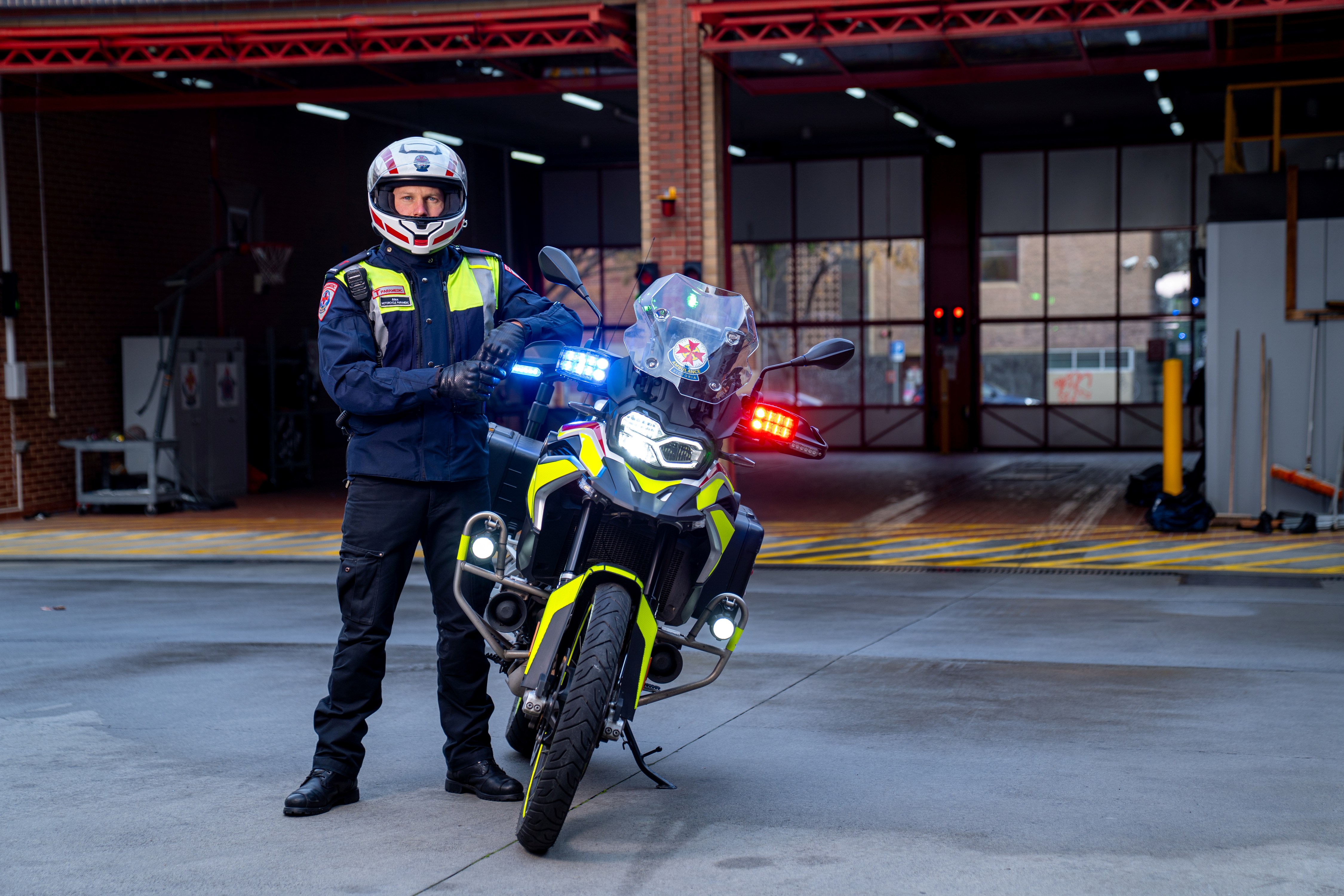
For a decade, Ambulance Victoria’s (AV) motorcycle paramedics have been weaving through Melbourne’s busiest streets to deliver critical care when every second counts. Born from a vision to beat congestion and reach patients faster, this specialist unit has become a vital part of Victoria’s emergency response network.
Operating primarily in Melbourne’s CBD, these highly skilled paramedics are also deployed to major events and surrounding suburbs, ensuring rapid access to patients in hard-to-reach locations.
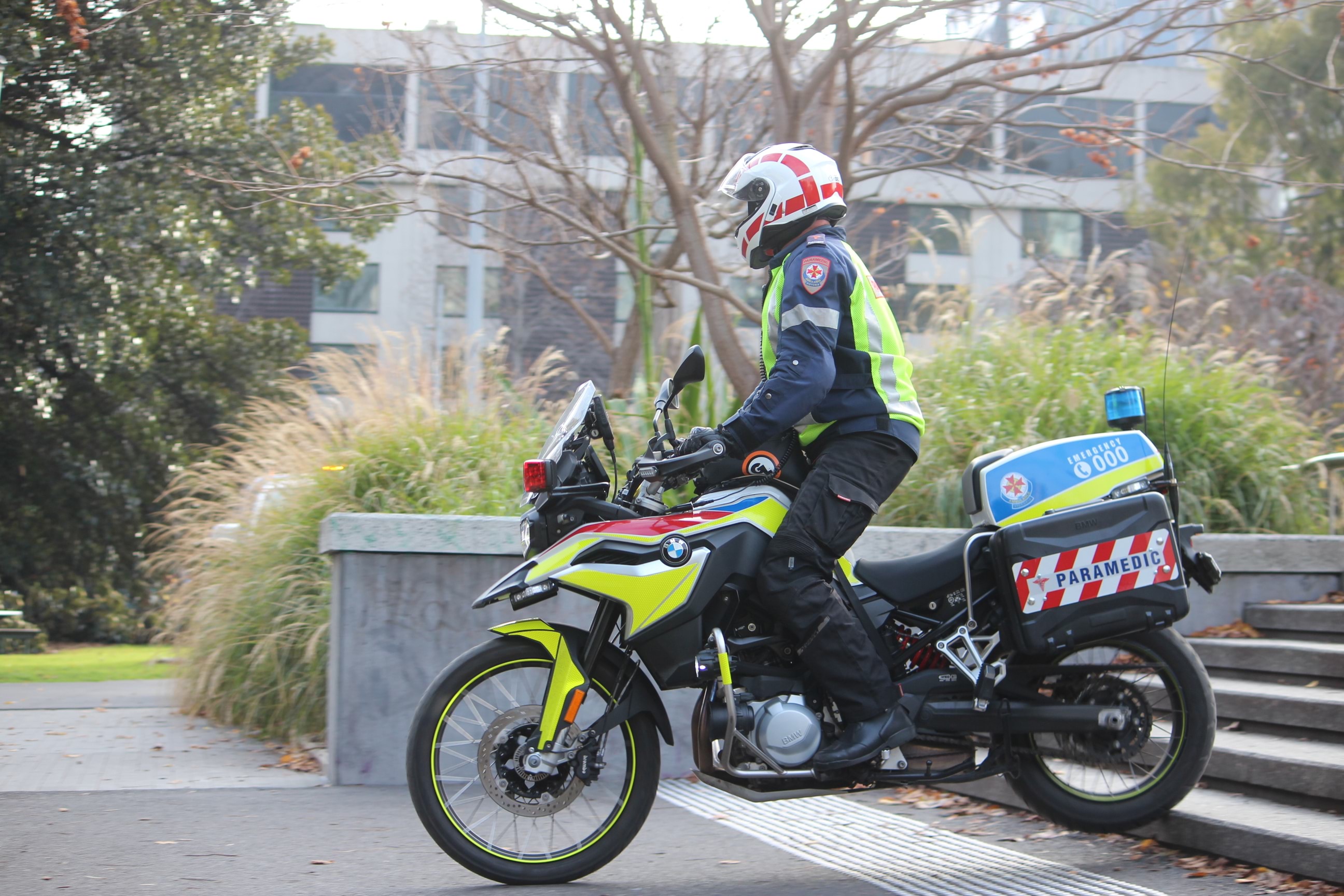
Riding BMW GS900 motorcycles equipped with sirens, emergency beacons, and panniers packed with life-saving gear, they bring the capabilities of an ambulance to places where four wheels simply can’t go.
AV Specialist Resources Team Manager Josh Tait said responding on a motorcycle overcomes several challenges routinely faced by paramedics, particularly in the CBD.
“Our motorcycle paramedics can move around traffic congestion far easier than a conventional ambulance and also have greater access to locations such as parklands, cycling tracks or in tunnels,” he explained.
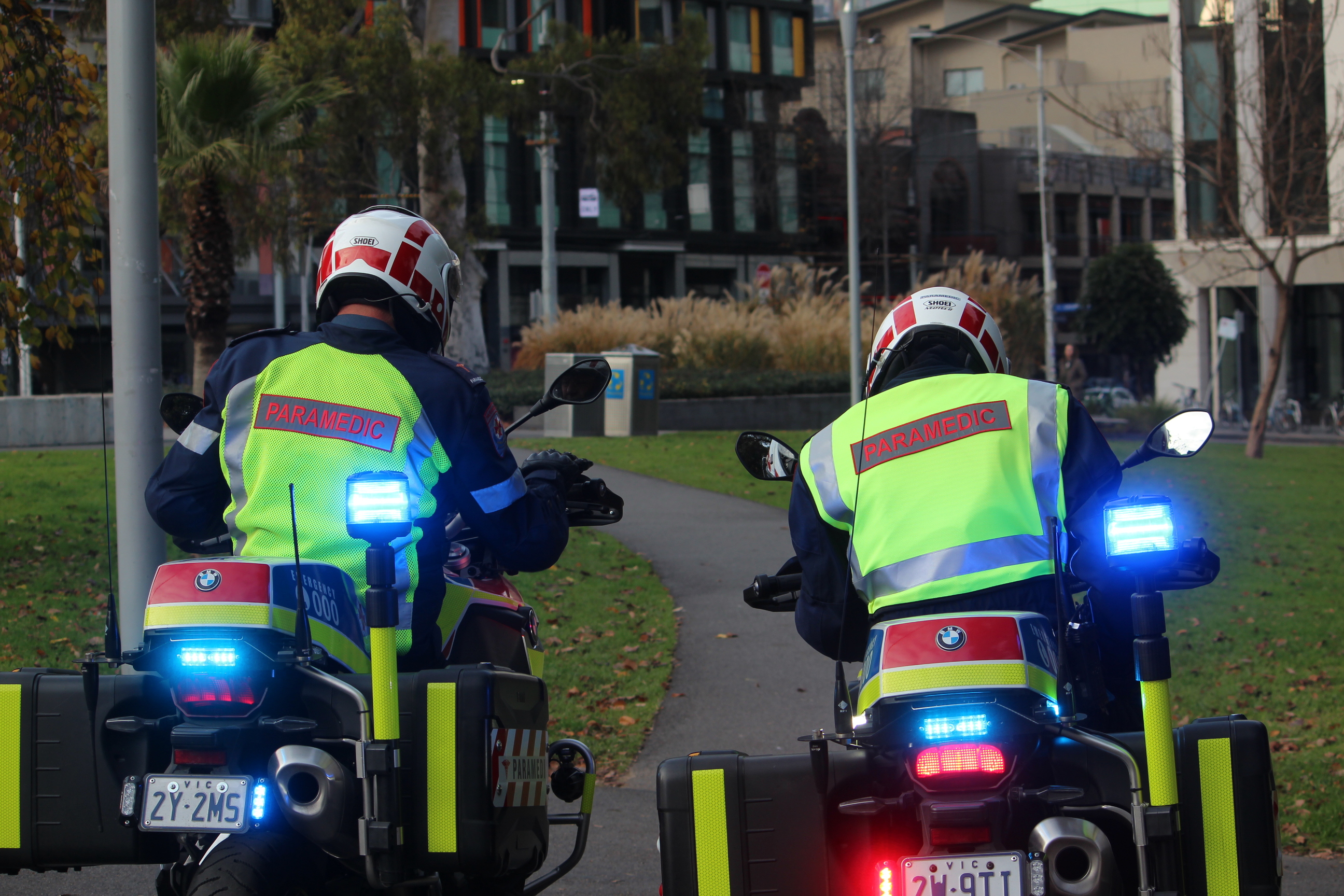
“The bikes carry modified versions of the equipment found on an ambulance, including an automated external defibrillator, medication, airway equipment and trauma management supplies, so are often able to bring life-saving care to patients quicker.”
Motorcycle paramedics are dispatched at the same time as a road ambulance, and when they arrive first, they can request additional resources or cancel vehicles enroute after assessing the patients.
“Sometimes it's hard for the call takers to get all the information about a patient or incident, so we’re able to send a motorcycle paramedic to the scene quickly to report back and potentially free up other resources if the incident is less serious,” Josh said.
The motorcycle unit is currently comprised of seven experienced paramedics.
Alex Ricco is one of the unit’s newest recruits, joining in July 2024 after starting as an on-road paramedic with AV in 2014.
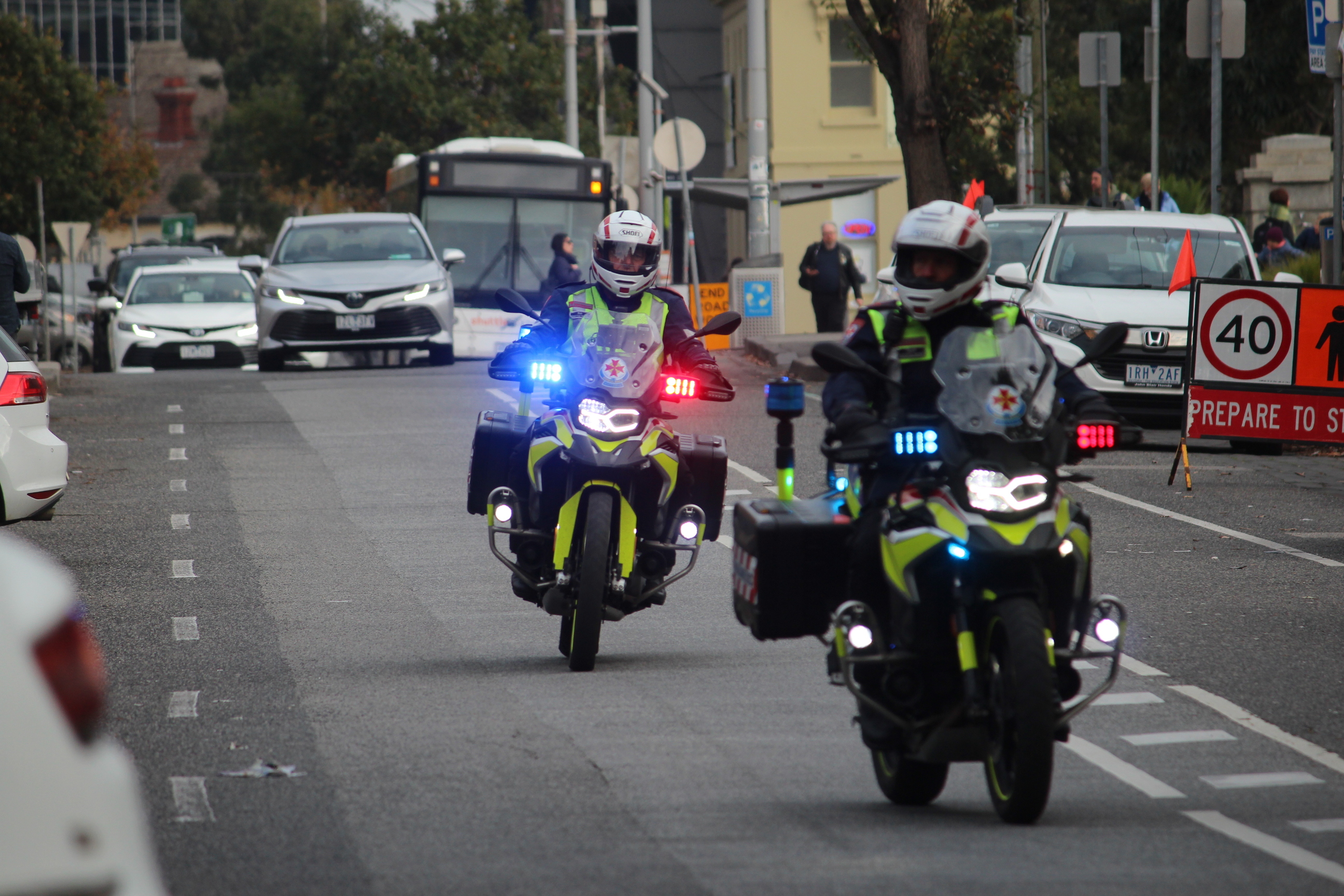
He said the unit make a big difference in the ambulance response to both high and low acuity cases.
“We’re able to bring high quality care directly to patients in locations where paramedics in a conventional ambulance have to park and venture in on in foot. It means for the most serious cases, where every minute matters, we’re able to provide potentially life-saving care sooner,” Alex said.
“We also attend lower acuity patients and assist with triaging them to ensure they get the right care, whether that be a trip to hospital in an ambulance or referring them to non-hospital care pathways.
“As a unit, our focus is working together with other AV crews to bring better and more appropriate outcomes for patients, whether that’s transporting them to hospital or connecting them with other healthcare options.”
Alex was motivated to join the motorcycle unit to combine his passion for motorbike riding with work.
It’s a similar story for Rob Mits, who joined the unit when it began after 20 years as an on-road paramedic.
“To become part of the unit, you have to be a motorbike rider and the more experienced, the better. There’s an initial riding test then annual rider training once you’re part of the unit. I love the job,” he said.
Rob said work as a motorcycle paramedic is busy but rewarding, with the unit sometimes attending around 15 cases per day.
“We typically have a higher caseload than the average paramedic because once we hand over the patients to the road ambulance crews for transport, we’re available to attend the next case,” he said.
“The sooner an ambulance is there – whether it’s a motorcycle or a conventional ambulance vehicle – the sooner the treatment can begin. Especially for the high acuity cases, every minute does count. If we can get there sooner, that leads to, hopefully, a better outcome for the patients.”
AV’s motorcycle unit was officially formed in November 2015 after a trial period.
Updated