

- Published:
- Wednesday 25 March 2026 at 9:40 am
The Victorian school holidays are fast approaching, and Ambulance Victoria (AV) is urging everyone to be well prepared before enjoying all the adventures our state has to offer.
While activities like camping, hiking and trail riding can be great fun, they can also result in medical emergencies, something experienced rider Gary, 69, became familiar with last November.
Gary and his stepson Drew were adventure biking along a fire trail in Buckland when a wrong turn saw them end up on a steep gravel trail not designed for their motorcycles.
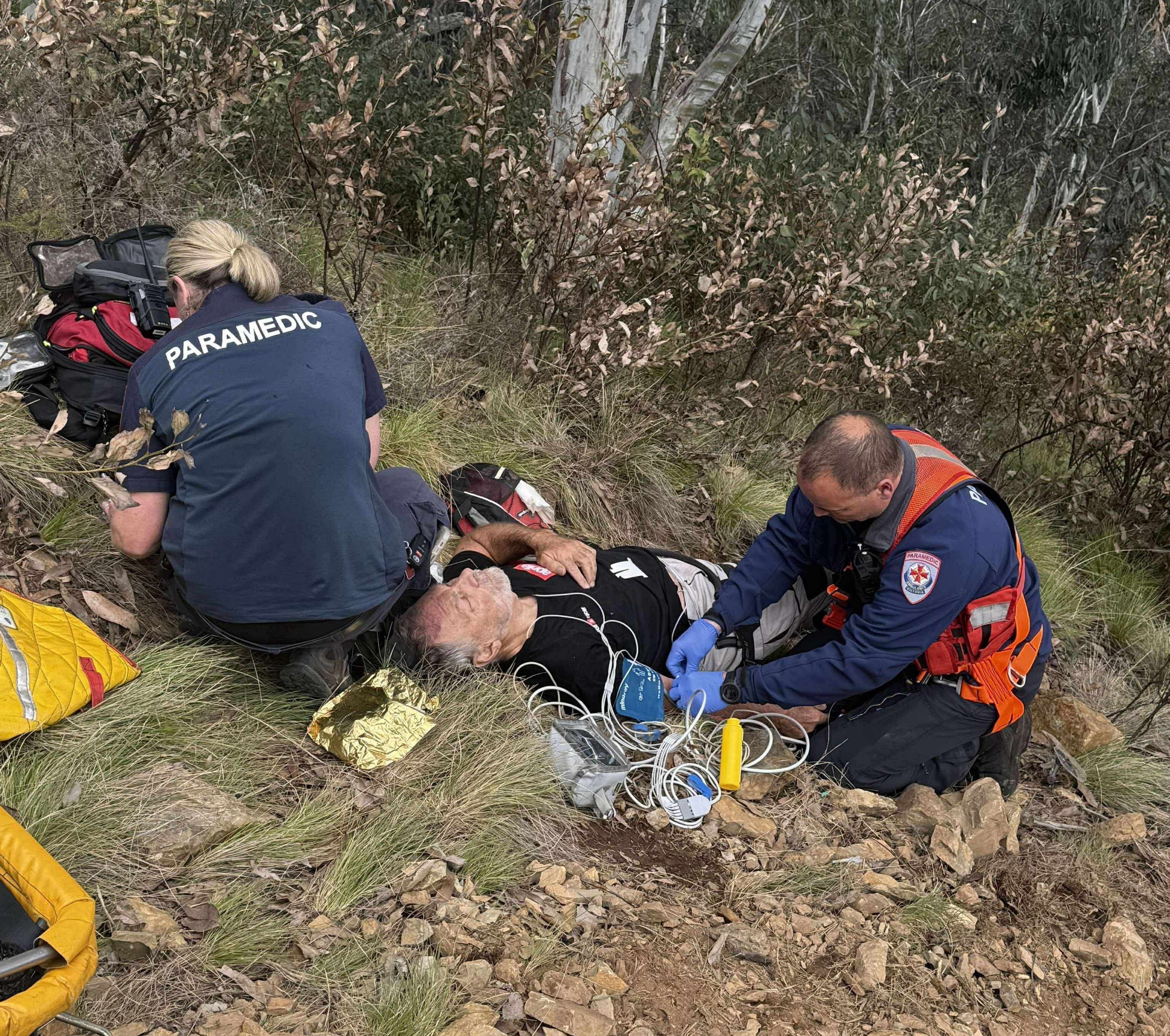
Unfortunately, Gary lost control of his bike and fell over the top of the handlebars, sustaining fractures to his pelvis and spine, as well as broken ribs and whiplash.
After realising what had happened, Drew called Triple Zero (000) as the remote location, steep landscape and extent of Gary’s injuries meant he was unable to be carried out of the park.
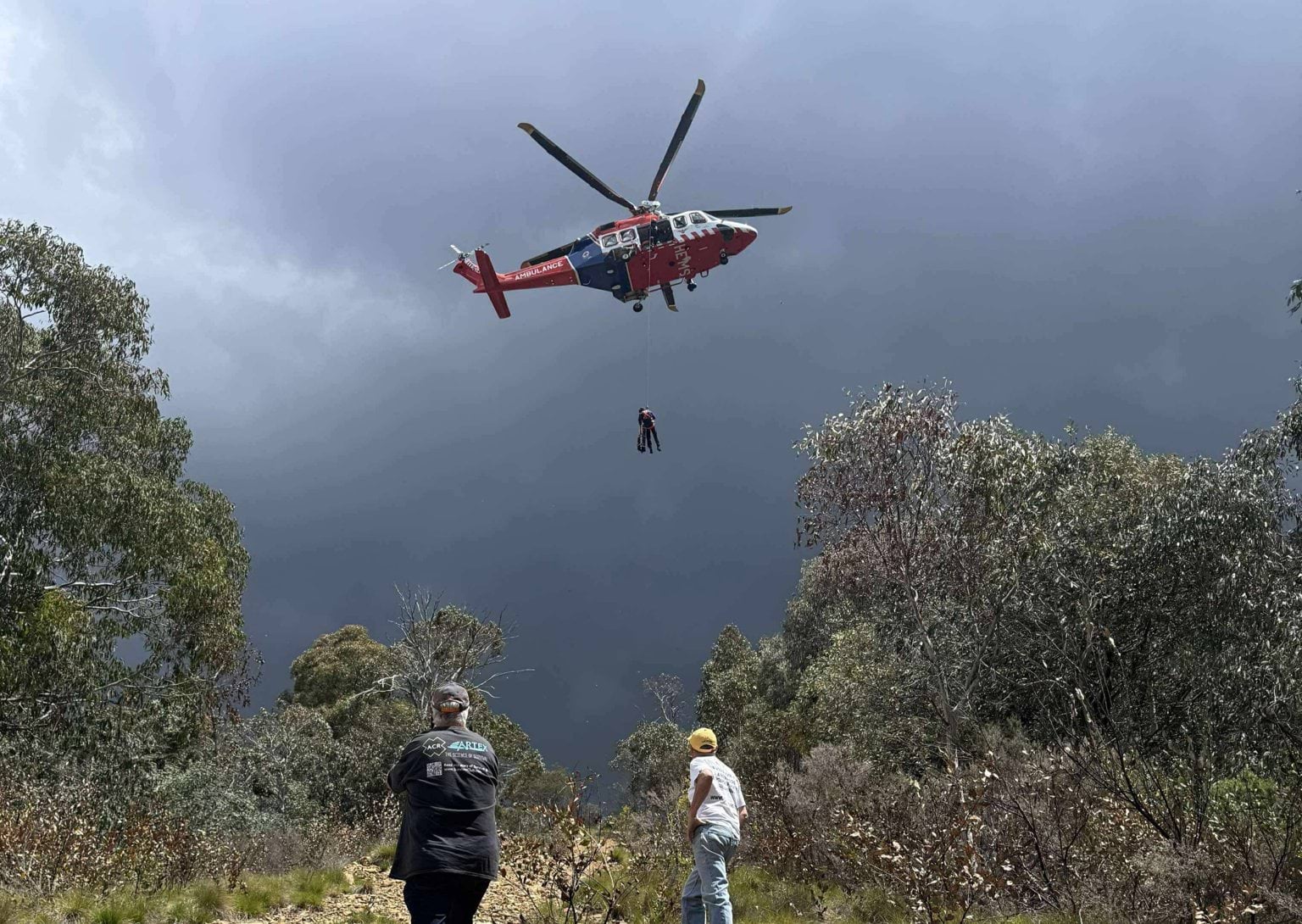
A specialist Air Ambulance Victoria (AAV) helicopter crew and an Advanced Life Support (ALS) paramedic attended the scene and worked with VICSES and Victoria Police to navigate the dense tree canopy and steep loose terrain to reach Gary.
A Mobile Intensive Care Ambulance (MICA) Flight Paramedic was winched into the location and provided Gary with pain relief, oxygen therapy and splints to reduce his movement, before they were both winched 38 metres in the air to the waiting helicopter.
Due to the weather, Gary was airlifted to an airfield where he was then transported by road ambulance to the Royal Melbourne Hospital for further treatment. After spending 10 days in hospital, he made the 400km journey back home.
Gary said his crash shows that no matter how experienced you are, serious accidents can happen to anyone.
“My message for others would be to stick to your plan and don’t attempt trails you haven’t prepared for,” he said.
“It’s also important to carry an emergency beacon and know the coordinates of where you are, so emergency services can find you easily.
“I’ve been an Ambulance Victoria member since I was 18 years old, and this is the first time I’ve ever needed to use it. I’m very grateful to the paramedics who came to my aid when I needed them most.”
AV Acting Hume Area Manager Adrian Pace said it’s crucial Victorians know how to get help in case something goes wrong in rural areas.
“It can be hard to know your exact location when heading out on rural or remote trails, such as the ones Gary was on, which is why we recommend everyone download the EmergencyPlus app,” he said.
“The app uses your phone’s GPS function to identify your address, latitude and longitude coordinates, as well as your ‘What3Words’ location – three words that emergency services can use to narrow your exact location down to three square metres, even in remote or unfamiliar environments.
“You may also consider taking a personal locator beacon (PLB) which, when activated, sends an emergency signal via satellite to emergency services.”
Regardless of the activity you have planned, Adrian said it’s important you’re well prepared as emergencies can happen anywhere and at any time.
“Make sure you’re dressed appropriately for the conditions and bring enough supplies, including water, food, sunscreen, a torch, basic first aid equipment and warmer layers in case you’re out for longer than expected,” he said.
“Research where you’re going and make sure your planned trip is suitable for your level of fitness and experience.
“Most importantly, always tell someone where you’re going and when you plan to return.
“You should also regularly check the VicEmergency app or website for incidents and warnings in the area you’re visiting.”
Top tips from Ambulance Victoria before you begin your outdoor adventures:
- Plan your journey – Before you set off, take time to check trail maps and difficulty ratings. Stick to those that match your skill level.
- Download the EmergencyPlus app -This free app has a built-in GPS function to pinpoint your exact location in an emergency, even if you don’t know where you are. The What3Words location function works offline so it can be used in remote areas with poor data connections as well.
- Tell someone your plans – Let a friend or family member know where you’re going and when you expect to return.
- Carry the basics – Pack a mobile phone, a small first-aid kit, enough water, and wear appropriate gear. Consider carrying a personal location beacon (PLB).
About Ambulance Victoria’s Air Ambulance service
- Ambulance Victoria’s Helicopter Emergency Medical Service (HEMS) and highly-skilled MICA Flight Paramedics can reach the most remote places, and with winching capabilities, can perform retrievals in the most remote and hard to reach locations across the state.
- Air Ambulance Victoria (AAV) helicopters and fixed wing planes can transport patients requiring life-saving treatment as quickly as possible to the nearest hospital.
- AAV retrieve and treat around 6000 patients per year.
- Babcock Australasia provide AV with pilots, aircrew officers and engineers, to help ensure 24/7 coverage of Victoria and surrounding waters
Updated