

- Published:
- Monday 3 August 2026 at 6:30 pm
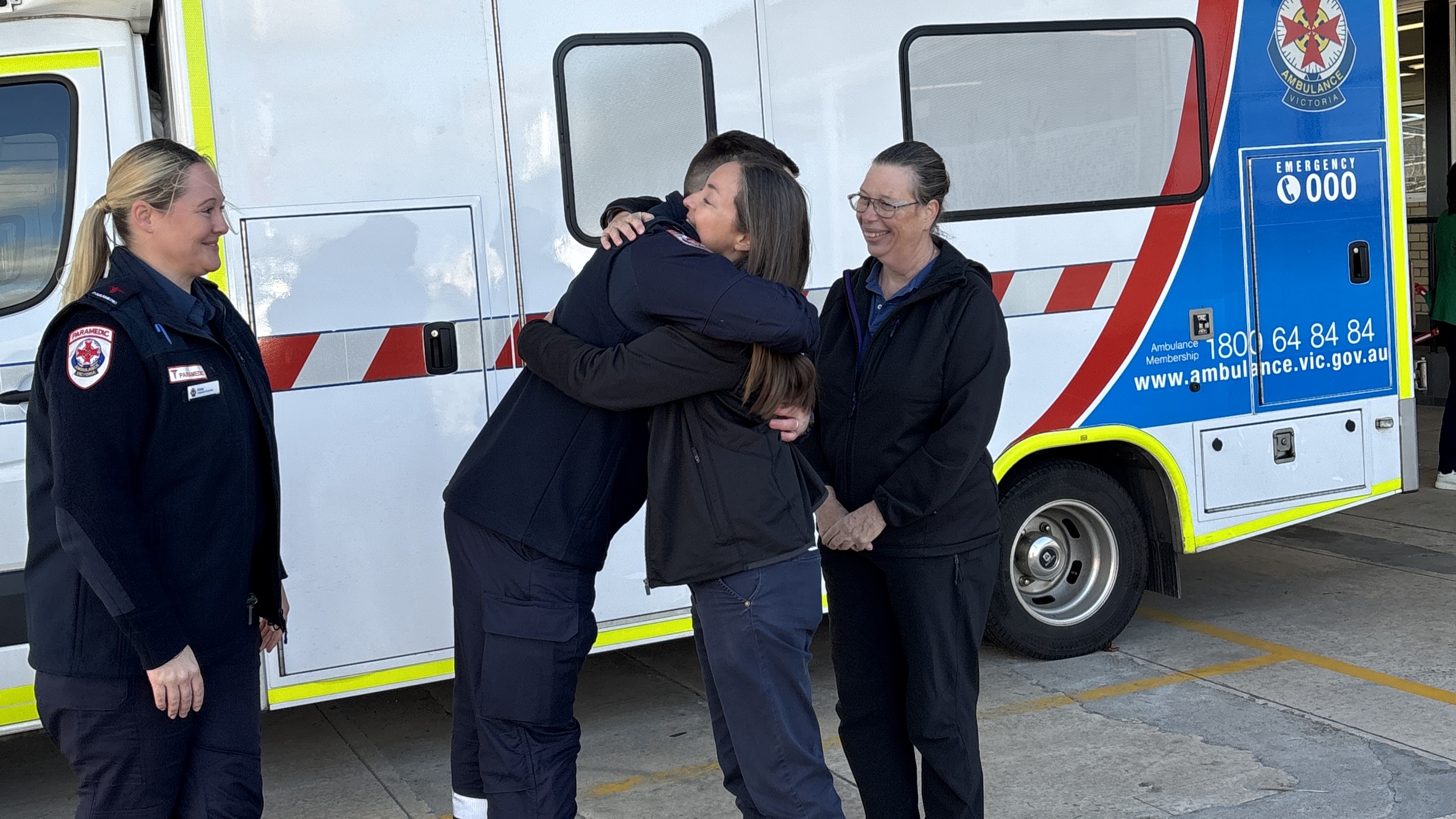
At just 50 years old, Emma Reynolds is fortunate to be alive after suffering a life-threatening stroke. Today, she is on track for a full recovery, thanks to a chain of rapid decisions that began with her partner's instincts and ended with a seamless emergency response.
This National Stroke Week (3 – 9 August) Ambulance Victoria is partnering with The Stroke Foundation to encourage Victorians to know the F.A.S.T. (Face, Arms, Speech, Time) signs of stroke.
Ambulance Victoria Director of Stroke Services Professor Christopher Bladin said every minute counts in stroke cases.
“A stroke occurs when blood supply to the brain is interrupted and when it happens, you need to act fast,” Professor Bladin said.
“This National Stroke Week, we’re encouraging all Victorians to learn the F.A.S.T. signs of stroke so you can quickly take action if a friend or loved one is experiencing a medical emergency.
“This year’s theme is ‘F.A.S.T. heroes’, a reminder that all Victorians can help save someone’s life.”
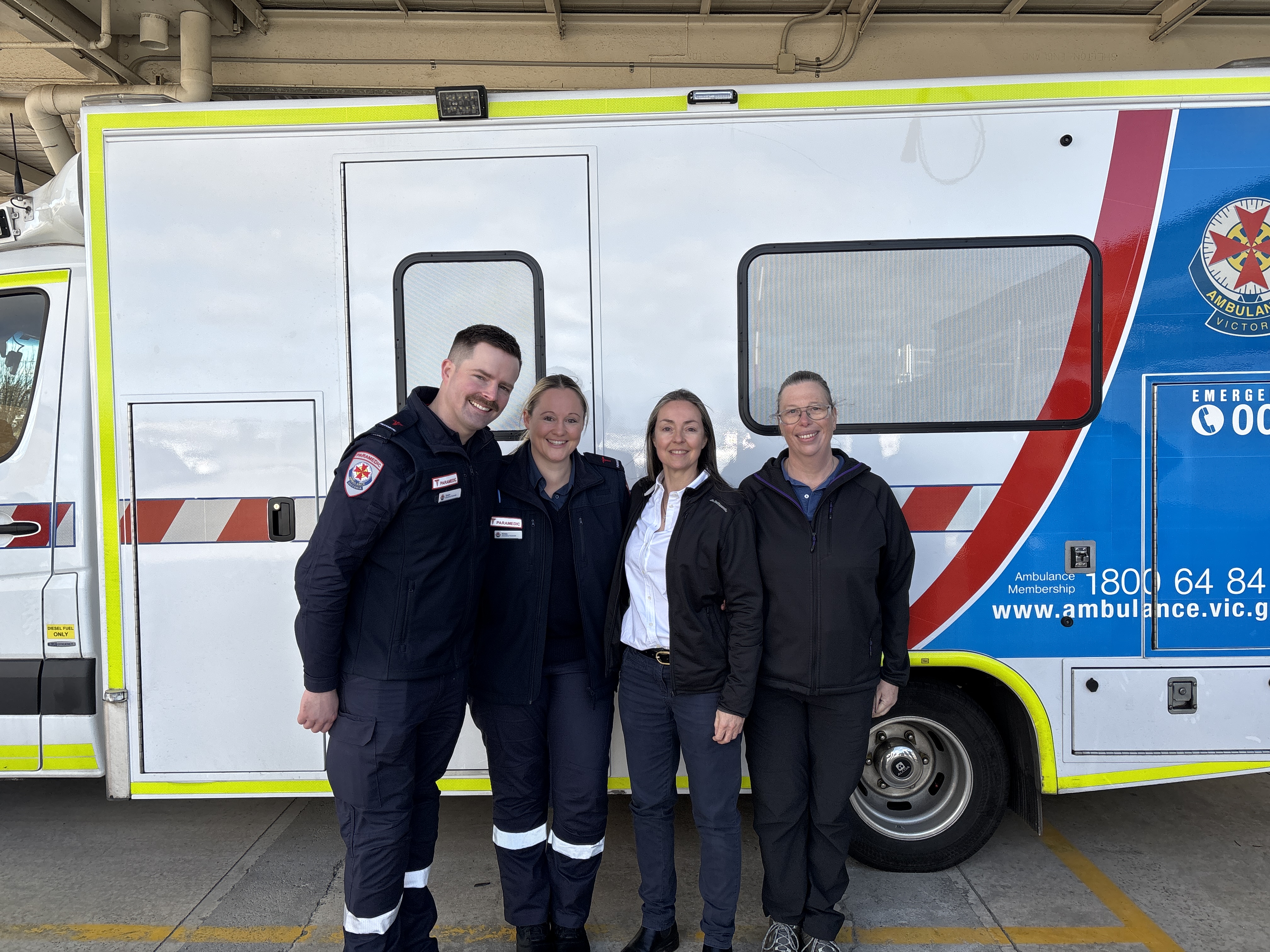
Nobody understands the lifesaving impact of knowing the F.A.S.T. signs better than Emma, who experienced a stroke in the early hours of Monday, 20 July.
Emma and her partner, Petra, were visiting Melbourne from Alice Springs to be with an unwell relative when the medical emergency struck.
Initially, Emma experienced a stabbing pain in her eyes and head that wasn’t easing with medication, but having experienced migraines before, neither her nor Petra were alarmed.
But the situation quickly escalated when Emma got up and fell at Petra’s feet, unable to stand.
“I couldn’t get up and I couldn’t work out why, it almost felt like I was drunk. I felt like I had no control,” Emma said.
At that moment, Petra, who is also a doctor, knew something was seriously wrong and called Triple Zero (000). It was during the call that her medical instincts took over, prompting her to say, “I think she’s having a stroke”.
Triple Zero Victoria’s Ambulance Emergency Communications Officer (Call-Taker) Connor Ferris explained that Petra was able to clearly describe the patients' stroke symptoms which confirmed the need for emergency medical assistance.
“When a stroke occurs, time is critical. Petra's ability to call Triple Zero immediately, act so fast and answer the critical questions calmly made a significant difference to Emma's outcome,” he said.
Ambulance Victoria Advanced Life Support paramedics Kirsty and Tyson arrived on scene within six minutes and performed a stroke assessment, where they confirmed Emma was experiencing left side facial droop and left side weakness.
Emma was immediately transported to Box Hill Hospital under lights and sirens, where she received clot-busting thrombolysis medication before being transported by the same ambulance crew to The Austin hospital for emergency clot retrieval.
Professor Bladin said Emma’s case reinforces how critical timing is when it comes to stroke.
“The sooner paramedics arrive and transport patients for clot-busting treatment, the better the person’s chance of surviving and maintaining a good quality of life,” he said.
“It’s phenomenal to see the recovery Emma has made and that’s all because her partner recognised something was wrong, called Triple Zero (000) and alerted the call-taker to the fact she suspected it was a stroke.”
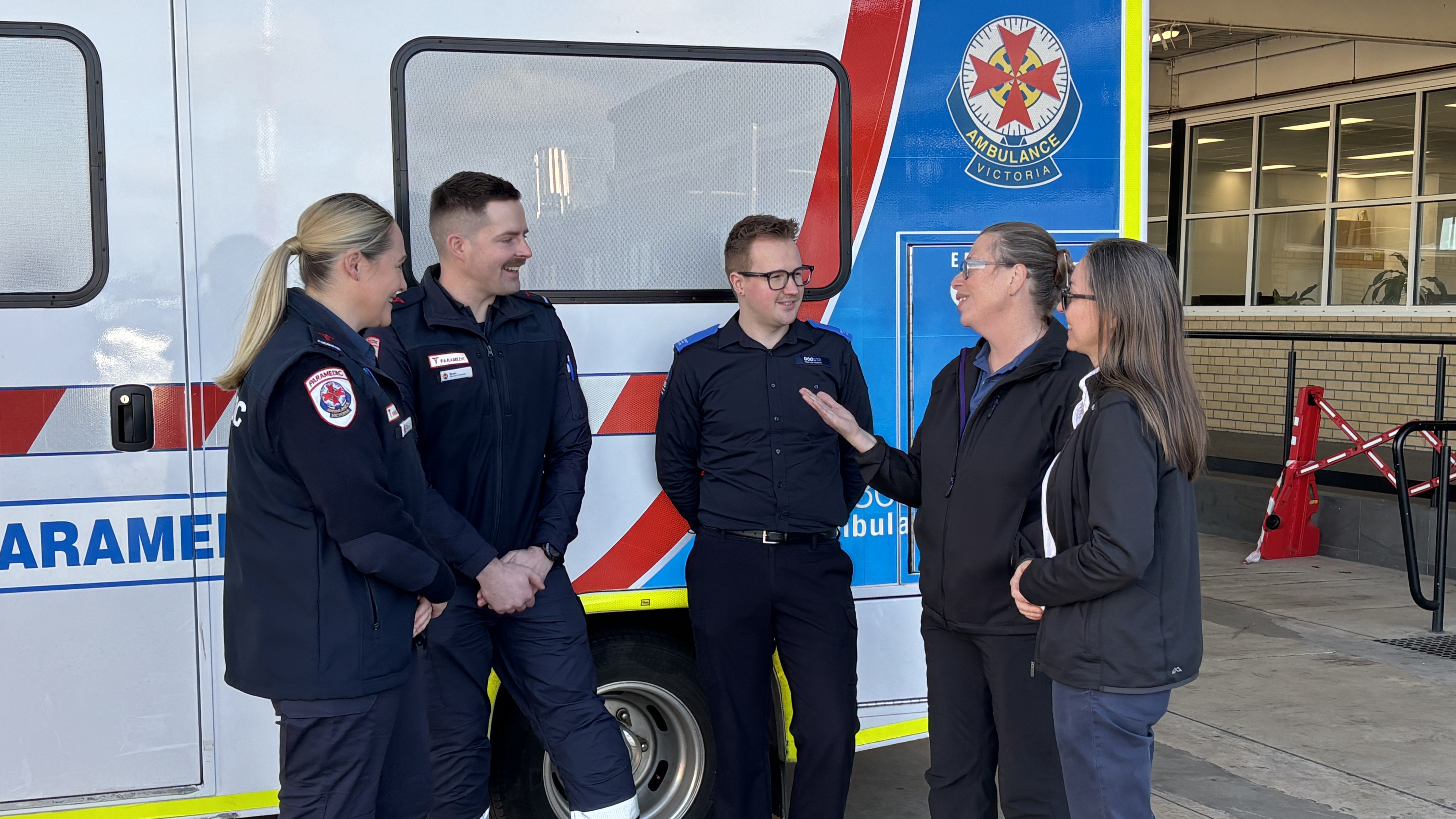
Stroke Foundation Chief Executive Officer Dr Lisa Murphy commended Petra for her quick-thinking in calling an ambulance.
“You don’t need a cape to be a hero, you just need to know the signs of stroke by learning the F.A.S.T. acronym and calling Triple Zero (000) when stroke strikes. It can save a life,” Dr Murphy said.
“When it comes to stroke, every minute matters. You never know when you, a loved one, a friend or a colleague will have a stroke and will need help. Please learn the F.A.S.T. acronym and call Triple Zero (000) at the first sign of stroke. It may just save a life.”
Petra said the emergency response was nothing short of phenomenal.
“It was unbelievable to see how the Triple Zero (000) call, the paramedics and the surgery came together seamlessly to give Emma the best chance of survival,” she said.
“Clot retrieval is a specialised technique that currently isn’t available where we live. We’re so fortunate Emma was in Victoria at the time with access to such highly skilled stroke professionals.
“I can see the difference quick intervention makes by how well Emma is recovering.”
The F.A.S.T. Signs of Stroke
- Face Check their face. Has their mouth drooped?
- Arms Can they lift both arms?
- Speech Is their speech slurred? Do they understand you?
- Time Is critical. If you see any of these signs call 000 straight away.
Updated