

- Published:
- Wednesday 25 June 2025 at 7:30 am

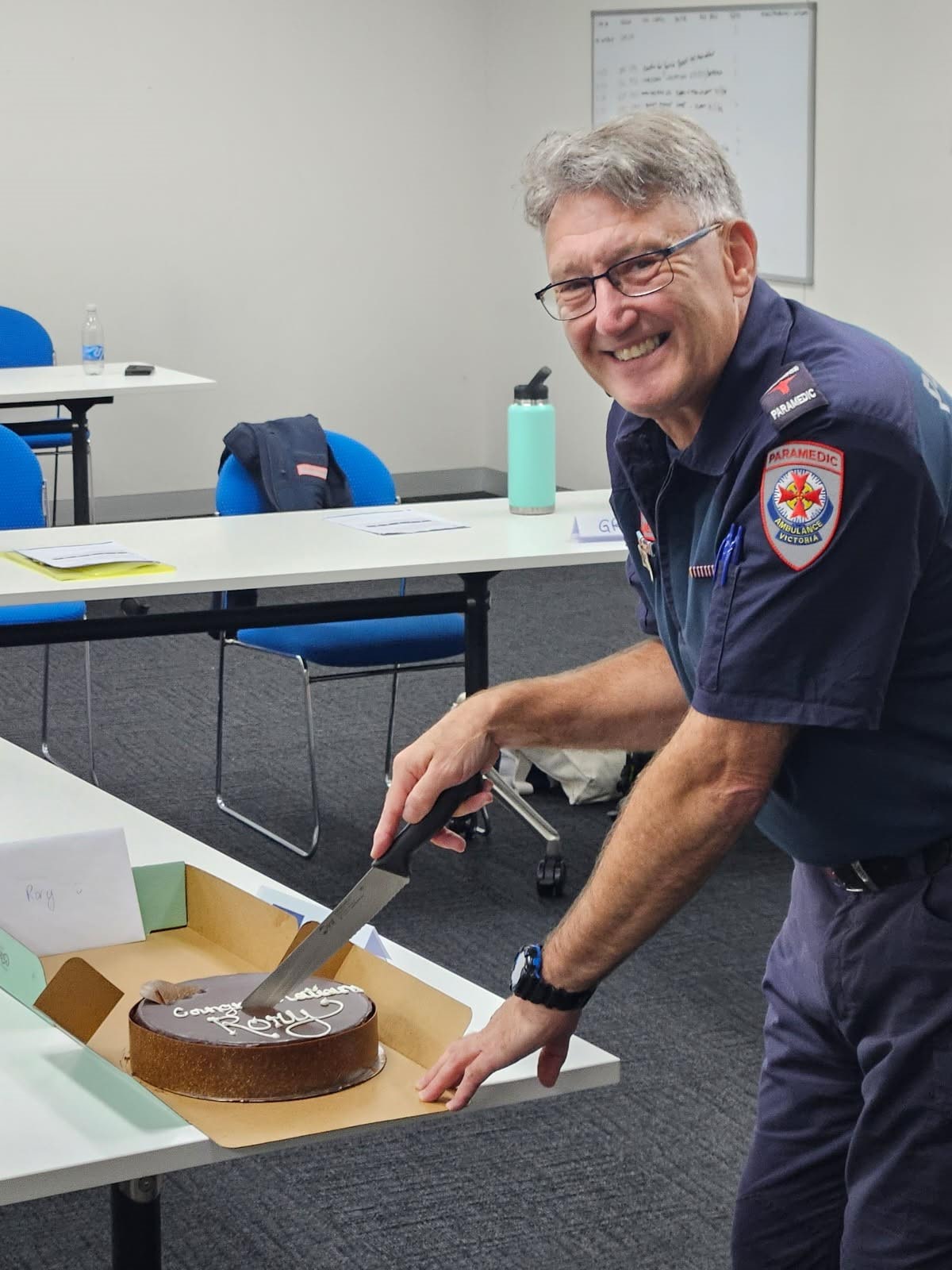
Ambulance Victoria (AV) paramedic Rory Hurlbut is retiring after a 42-year career which saw him effect lasting change on Victoria’s ambulance service.
Over his four decades, Rory has worked in both the Metropolitan and Grampians regions, spending time as an on-road paramedic, Clinical Instructor, Team Manager, Communications Officer, Driving Standards Facilitator, Manual Handling Facilitator and Coordinator, in Peer Support, and more.
Before joining Ambulance Service Melbourne in May 1983, Rory was a mechanic by trade so it made sense that it was with the ambulance vehicles, in driving training and manual handling that he was most influential in his ambulance career.
Rory had been an ambulance officer for less than a year when he was invited onto the Vehicle Design Committee, playing a key role in shaping the way modern ambulances look today.
“Over my time on the committee, we developed the first side access doors and grab-and-go lockers, as well as adding the first spine boards and straps onto the ambulances to improve patient care through manual handling equipment,” Rory said.
“My motivation was always safety – of our staff, of the patients and of the public.”
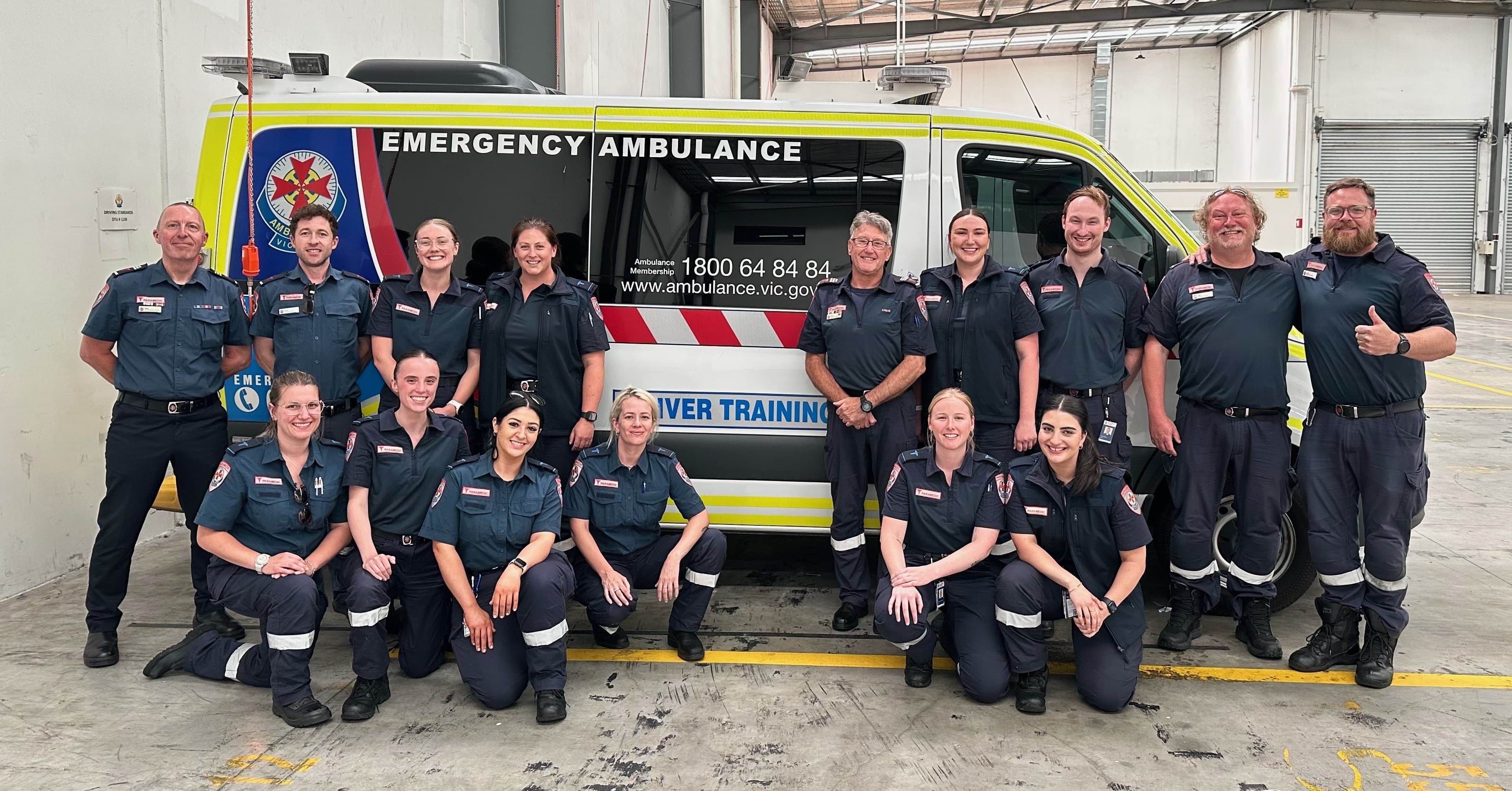
This motivation led Rory into two of his other significant roles, as a Driving Standards Facilitator and Manual Handling Facilitator and Coordinator.
When Rory began his career, defensive driving training was delivered by an external provider but as paramedicine qualifications developed, so too did driving standards.
Rory became one of the first Driving Standards Facilitators and said it was a huge transition, as all new and existing staff and volunteers undertook in-house driving standards training for the first time.
For Rory, the change once again brought his passions together and he continued as a Driving Standards Facilitator until the end of his career.
“Because I have my training and knowledge with motor vehicles, I can explain things like anti-lock braking systems, airbag technology and why we need to complete our vehicle check of tyres and engine components before a shift. It’s like this job was designed for me and it will be so hard to walk away from,” he said.
In 2010, Rory took on the Manual Handling Coordinator position and was again involved in implementing critical change.
“I was responsible for the roll out of the stair chair and the emergency lifting cushion across the state, working alongside our health and safety coordinators to implement them,” he said.
“These two pieces of equipment have been pivotal changes – now reducing the need to lift patients down stairs or manually lift people up from the floor onto a chair or the stretcher.
“Manual handling measures are so important because paramedics and first responders don’t have a fixed, controllable workplace. We have to do as much as we can to stay safe.”
Reflecting on the different committees he’s been part of and training roles he’s held, Rory said he does it all to pay forward the support he received from his first clinical instructor.
“I owe Paul Moore every gratitude for his assistance in my first four months at City branch, when I was a very green and enthusiastic young student. Paul was my mother duck, my driving instructor, my clinical instructor, my mentor,” Rory said.
Rory will officially retire from AV in January 2026 after a period of long service leave.
He said it is tough to say goodbye to a career which has taken him around the state, seen him brush shoulders with royalty while working at the Melbourne Cup, allowed him into the pit lanes while working at the F1 Grand Prix, and seen him make a difference to the lives of so many patients, including helping deliver 19 babies.
“It’s just an amazing career. There have been good days and bad days, but a lot more of them good,” he said.
“I've done a lot of different roles and loved every one. People ask how I stayed happy and motivated in this job after 42 years and it’s because it wasn’t 42 years of doing just one thing.
“I’m very proud of what I’ve achieved.”
Updated