

- Published:
- Friday 27 June 2025 at 12:43 pm
A regular Friday game of lawn bowls took a deadly turn for George Lucas six months ago when he went into cardiac arrest on the green.
The 80-year-old from Lara has been playing bowls for 30 years and had no symptoms before he suddenly became unresponsive mid-game.
“I just felt a little bit funny across the chest—not a real tightness, just a sense that something was off. Then I started feeling a bit sweaty, but I dismissed it as adrenaline from focusing on my game. Then my jaw started to ache, and 10 minutes later, I collapsed on the green,” George said.
Luckily for him, fellow players Karen Dick, Michael Fedyk, Don Grellet and Elke Van Baar jumped into action, calling Triple Zero (000) and starting cardiopulmonary resuscitation (CPR).
Don retrieved the club’s AED and used it to provide two shocks to George, who regained consciousness before emergency services arrived.
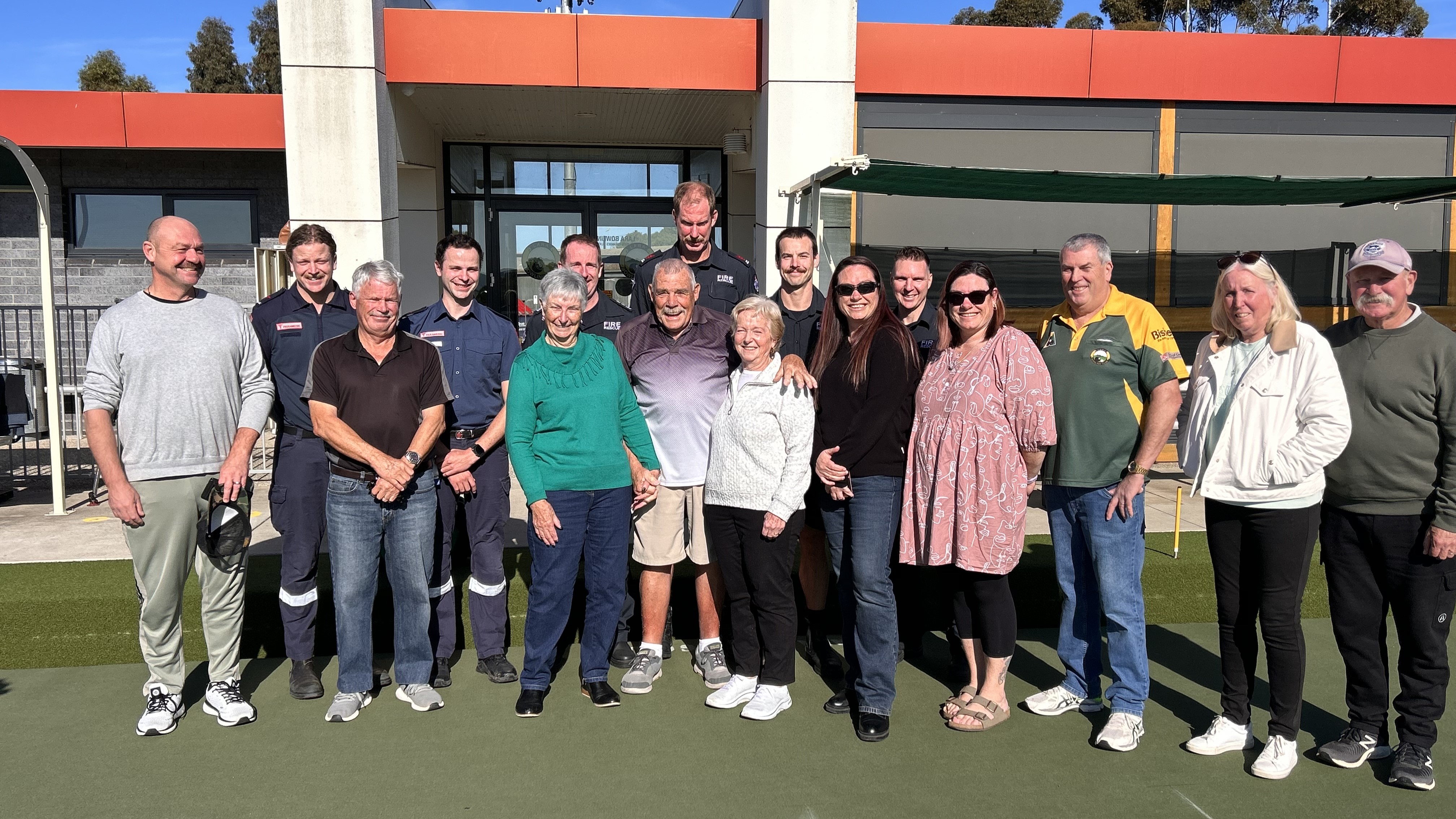
Within minutes, Fire Rescue Victoria were on scene, closely followed by Ambulance Victoria (AV) crews, including paramedics Pat McAllister and Alex Ikin.
Lara Bowling Club Board Member, Alan Gillett, said luckily the club was prepared for the incident.
“We had the AED serviced just a couple of months prior, so we knew it was ready to go. Having it on-site and having members trained in CPR made all the difference,” he said.
“That defibrillator saved George’s life. It’s a reminder to every club and community group to make sure they have access to one and know how to use it. You never think it’s going to happen to someone you know—until it does.”
George was taken to hospital, where he underwent surgery, including a double bypass and valve replacement. After a long recovery, he’s now back on the green.
“I feel incredibly lucky. If I had been home alone that day, I wouldn’t be here. The quick response of my mates, the AED, and the paramedics saved my life,” George said.
Now, he’s back enjoying the game he loves, albeit with a newfound appreciation for life—and for the “zipper club” he’s now a proud member of, referring to the heart surgery scars many survivors share.
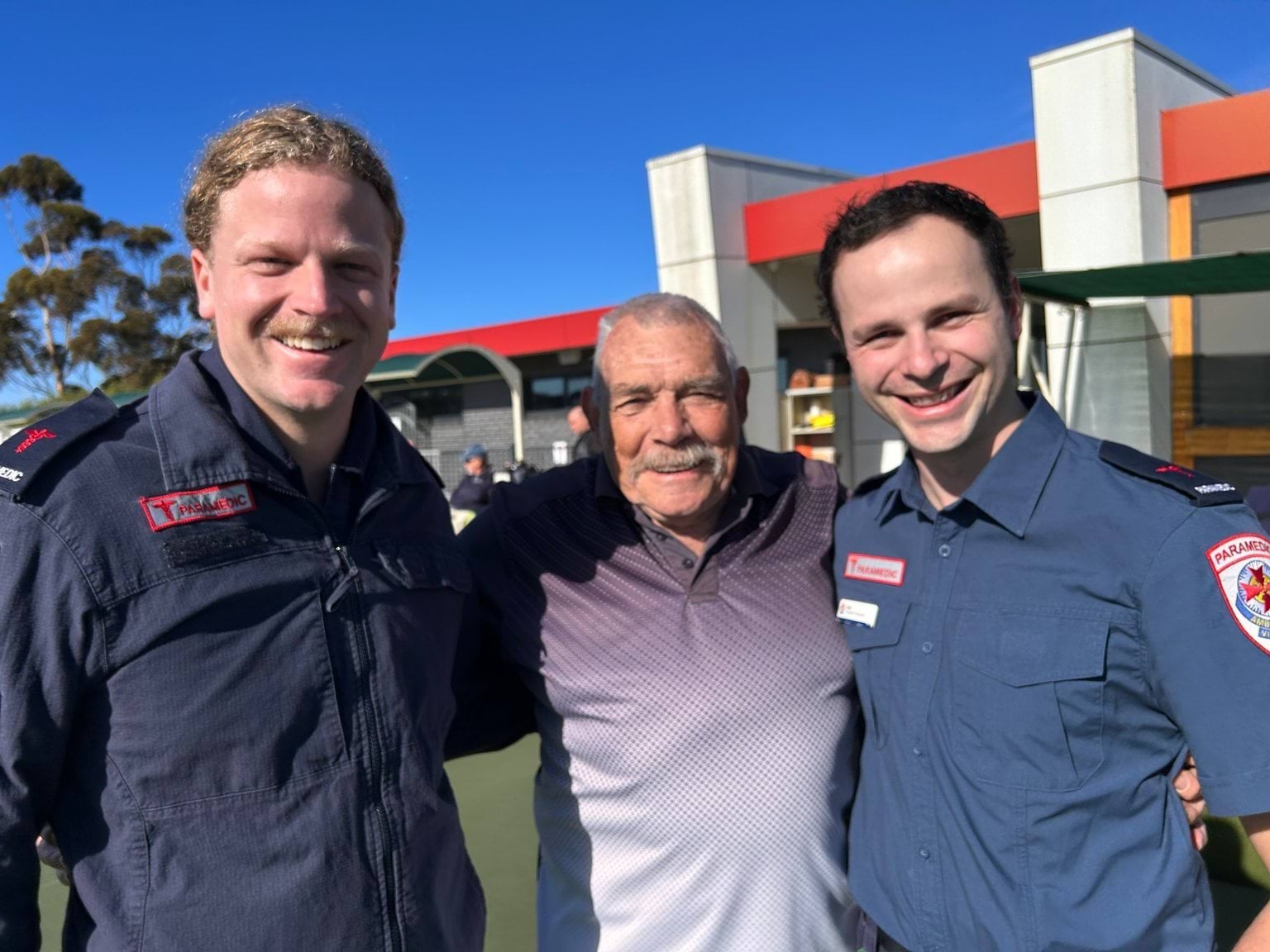
Ambulance Victoria Advanced Life Support (ALS) paramedic Alex Ikin said the outcome would have been very different if it weren’t for the quick-thinking bystanders.
“Time counts in a cardiac arrest, for every minute CPR is delayed, the chances of survival decrease by 10 per cent,” he said.
“Everyone involved in helping George did such a fantastic job that he was conscious by the time we arrived.
“It really shows the lifesaving difference you can make by doing three simple steps; Call, Push, Shock.”
Fire Rescue Victoria Senior Station Officer Heath Tierney said George’s case highlights how vital the Emergency Management Response (EMR) partnership is with Ambulance Victoria.
"Our skill sets really complement each other and give patients the best chance of survival," he said.
"We received a very generous thank you card around Christmas letting us know George had survived so it's great to see he's now made a full recovery and is back playing bowls."
George’s story highlights the critical importance of CPR training and having AEDs in public spaces. His survival is a testament to the power of quick action and community preparedness.
Minutes matter in cardiac arrests, when a patient receives CPR and a shock from an AED before paramedics arrive, their chance of survival more than doubles.
Ambulance Victoria’s 2023/24 Victorian Ambulance Cardiac Arrest Registry (VACAR) Annual Report highlighted that Victoria has Australia’s best cardiac arrest survival rate and the third best in the world.
Resources on CPR are available in multiple languages on the Ambulance Victoria website.
Updated