

- Published:
- Thursday 10 September 2026 at 9:01 am
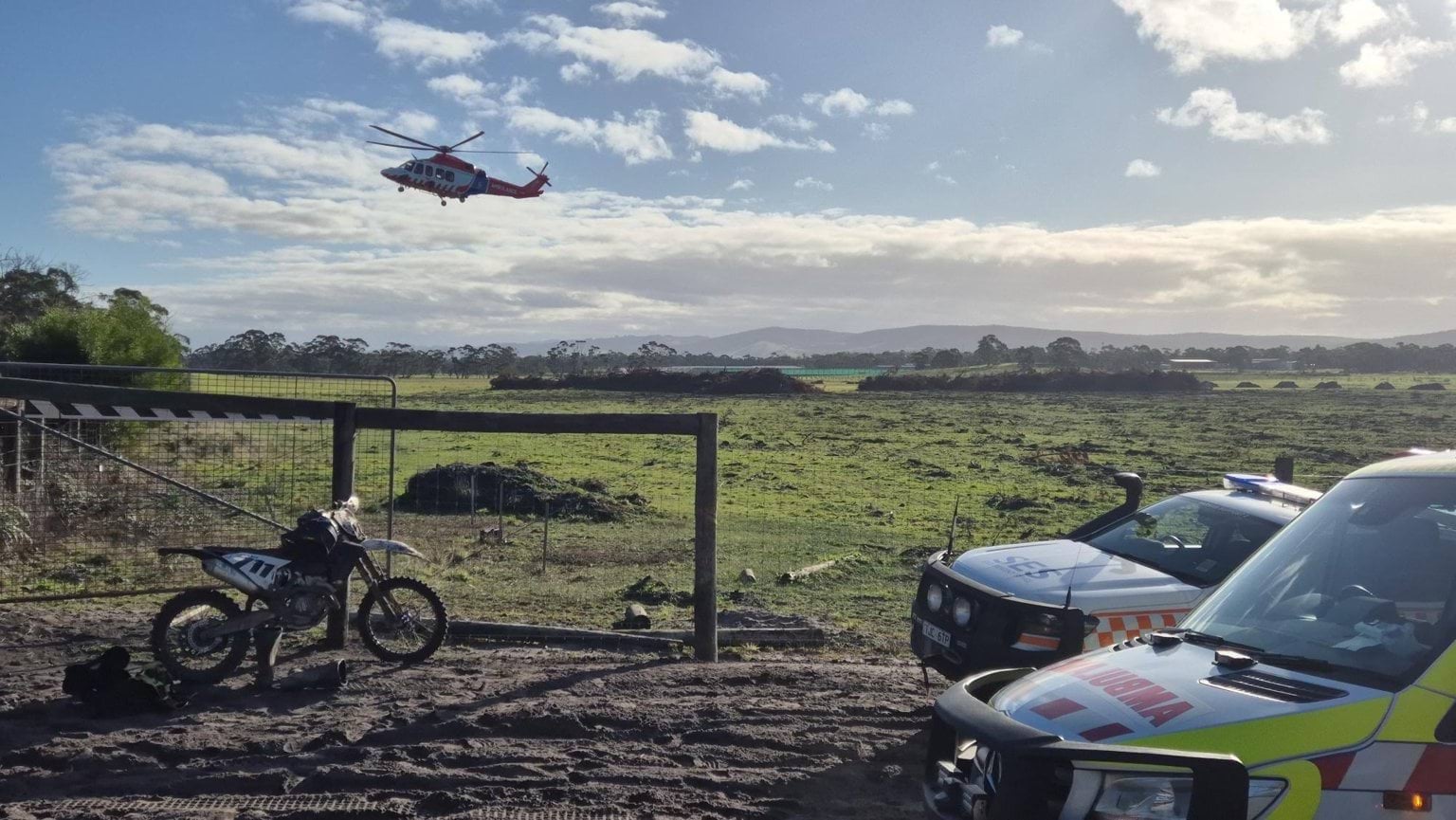
A seamless multiagency response helped get a dirt bike rider with serious spinal injuries the treatment he needed, after a crash on a remote forestry track in Gippsland.
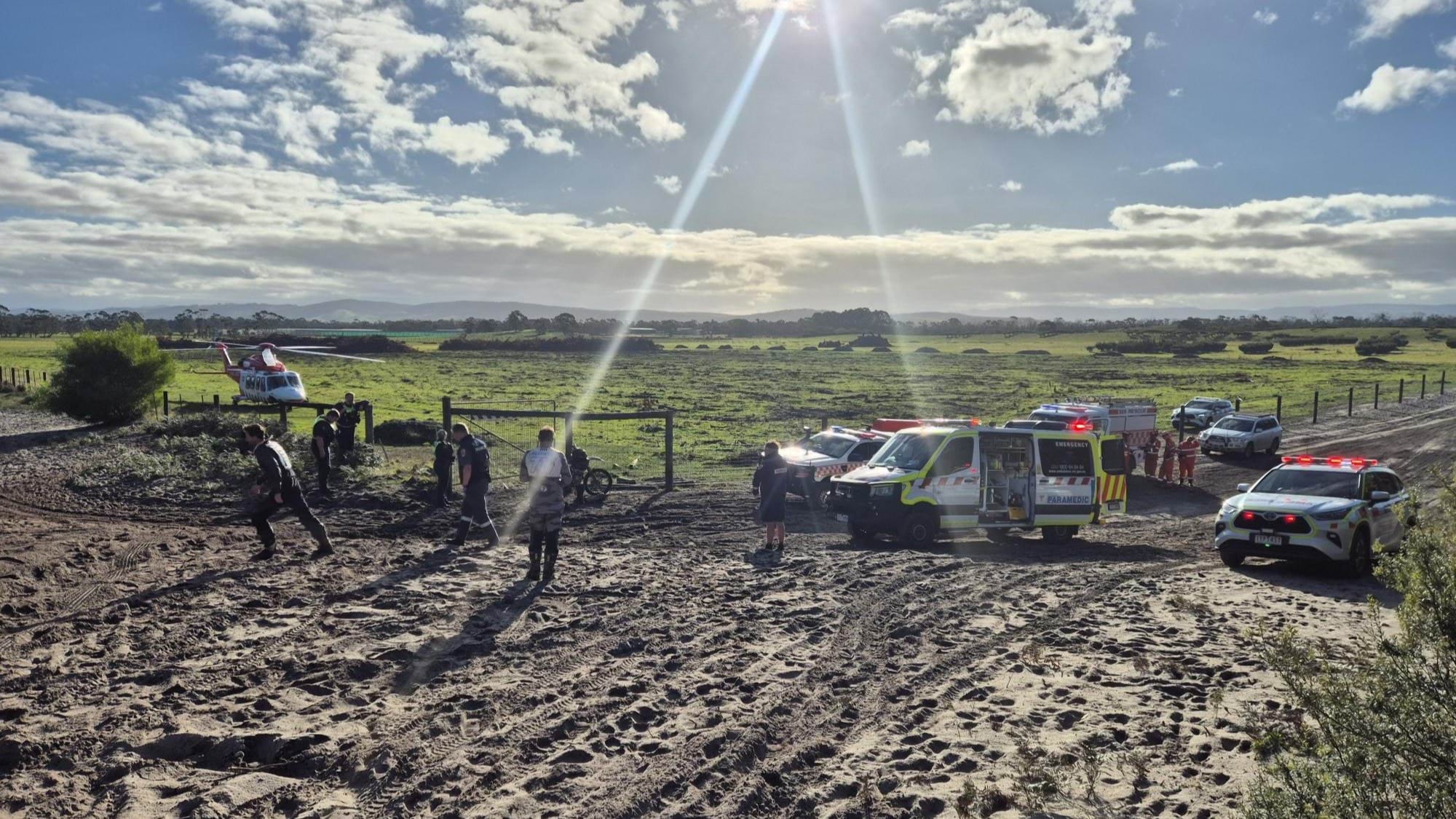
Ambulance Victoria advanced life support paramedics and a specialist Air Ambulance Victoria helicopter crew worked alongside Victoria State Emergency Service (VICSES) and Victoria Police to locate and treat 27-year-old David on a Hedley forestry track, before airlifting him to hospital for further care.
David had been riding with friends when he fell off the back of his dirt bike and was instantly unable to move his legs.
With limited phone reception, one of David’s friends left to call Triple Zero (000). In a stroke of luck, he came across an ambulance on their way to David and was able to guide the paramedics directly to the scene.
“The patient was in a difficult spot roughly 300 metres down a sandy trail the width of a motorbike,” Ambulance Victoria Advanced Life Support paramedic Wyatt Kilgower said.
“Due to the cold weather, there was the risk of hypothermia, so we chose to keep some of David’s protective riding equipment on to assist with warmth. The rigid padding was also helping prevent additional movement which can cause further injury in spinal cases.
“We administered pain relief to David and applied spinal precautions while waiting for other emergency services to assist with the extrication.”
Once on scene, VICSES retrieved David from the trail using their mule stretcher, transporting him to the nearby Air Ambulance Helicopter for a full assessment.
David was given more pain medication and airlifted to The Alfred Hospital where it was revealed he had a T12 burst fracture with bone pushing on his spinal cord, as well as fractures on his L1 and L4 vertebrae.
After spending a couple of weeks in hospital, David was moved to an inpatient rehabilitation center, where he was learning to walk again. Despite all he’s been through, he can’t express his thanks enough to everyone who came to his aid.
“I am definitely thankful for the role everyone played that day," he said.
“I remember the army of people from different emergency services who all worked together to help me. There were so many parts to the response but it all felt quick to me."
Ambulance Victoria Yarram Team Manager Michael Jacobs said the case was a great example of an interagency emergency response.
“We regularly train alongside our emergency service partners to ensure we can respond effectively to complex incidents like David’s, regardless of location,” he said.
“In rural communities such as Hedley, close collaboration between agencies is essential to ensure patients receive the care they need as quickly as possible.
“Everyone involved in David’s case worked seamlessly together, drawing on shared training and expertise to give him the best possible chance of recovery. This outcome is a testament to the value of strong partnerships across emergency services.”
Top tips from Ambulance Victoria before you ride:
- Know your trails – Before you set off, take time to check trail maps and difficulty ratings. Stick to trails that match your skill level.
- Download the EmergencyPlus app – This free app has a built-in GPS function to pinpoint your exact location in an emergency, even if you don’t know where you are. The What3Words location function works offline so it can be used in remote areas with poor data connections as well.
- Ride with a mate – Solo rides can turn risky quickly. Ride with a friend and look out for each other.
- Tell someone your plans – Let a friend or family member know where you’re going and when you expect to return.
- Carry the basics – Pack a mobile phone, small first-aid kit, enough water, and wear appropriate safety gear — a helmet is a must, and gloves, knee and elbow pads are a smart idea.
Updated