

- Published:
- Wednesday 11 November 2026 at 11:55 am
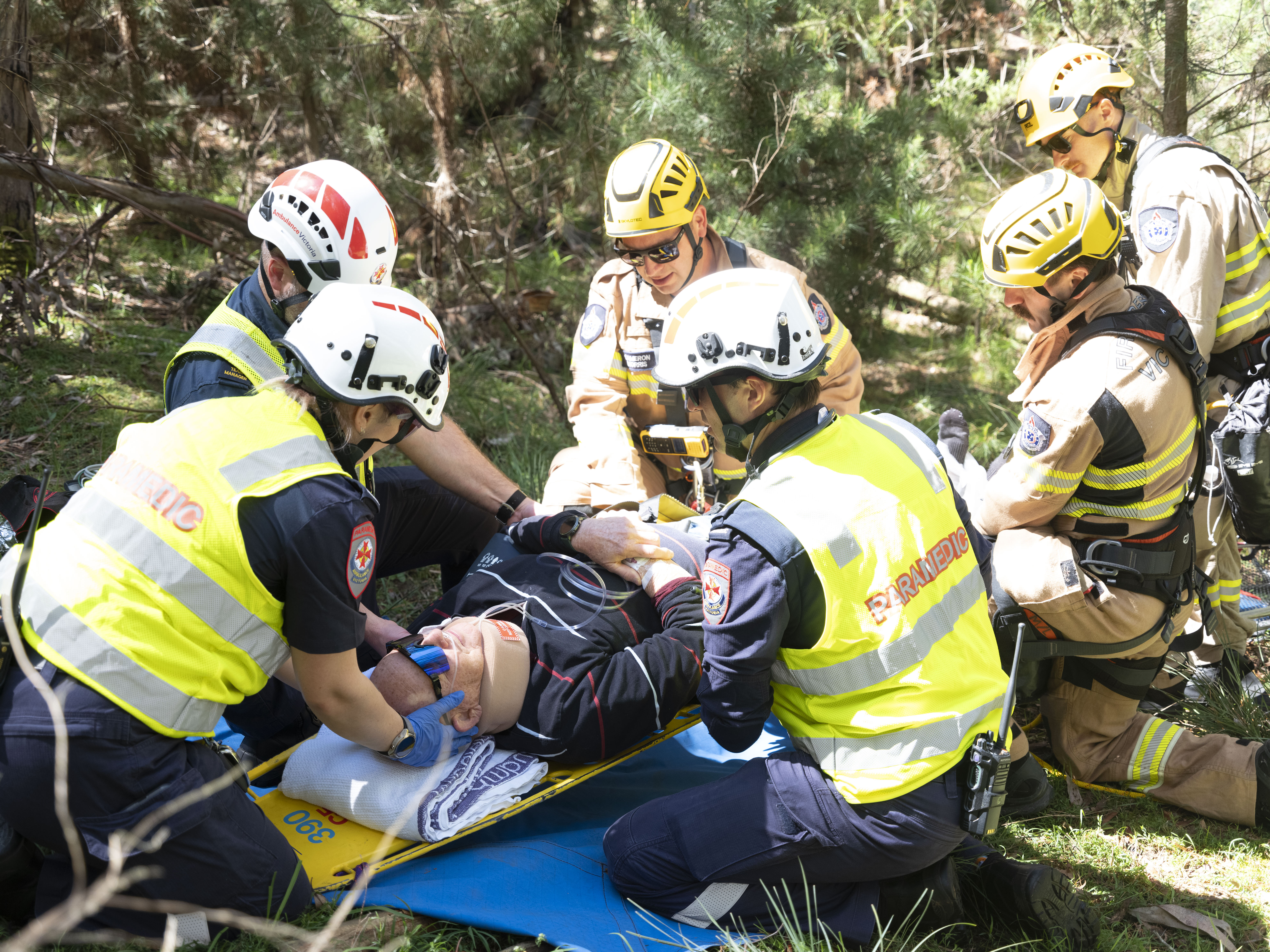
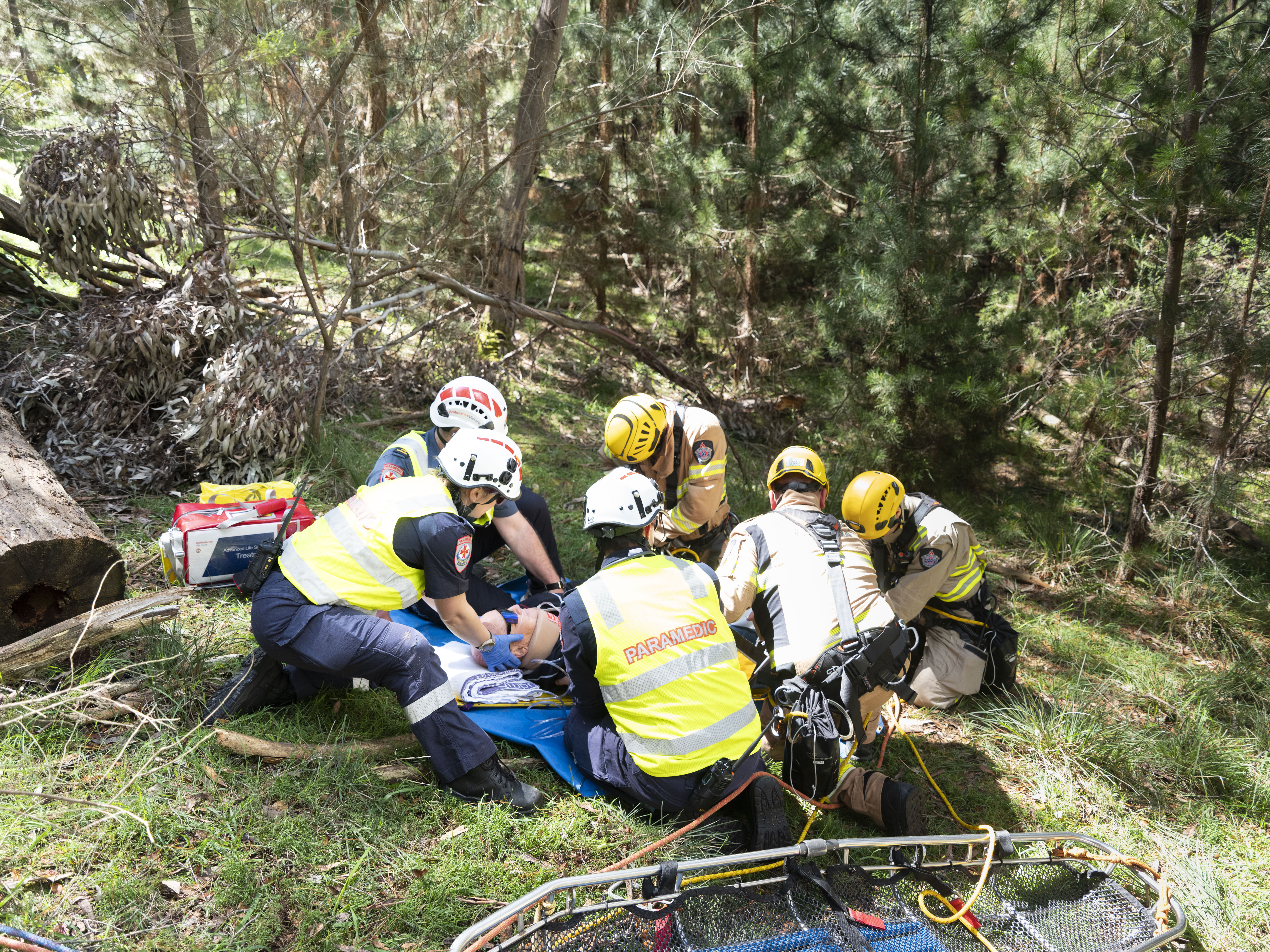
Local emergency services responded to a realistic rescue scenario involving an injured mountain bike rider deep within the Creswick trail network, in preparation for warmer weather drawing more riders to the trails.
Held at the local Djuwang Baring (Creswick Trails) in October, the training exercise brought together Ambulance Victoria, Victoria Police, Country Fire Authority, Fire Rescue Victoria, Victoria State Emergency Service, Triple Zero Victoria, and the Hepburn Shire Council to rehearse the complex response.
The simulation tested all stages of a rescue from the moment a Triple Zero (000) call comes in, to confirming the exact location of the incident and safely extricating the rider from deep within the trail network.
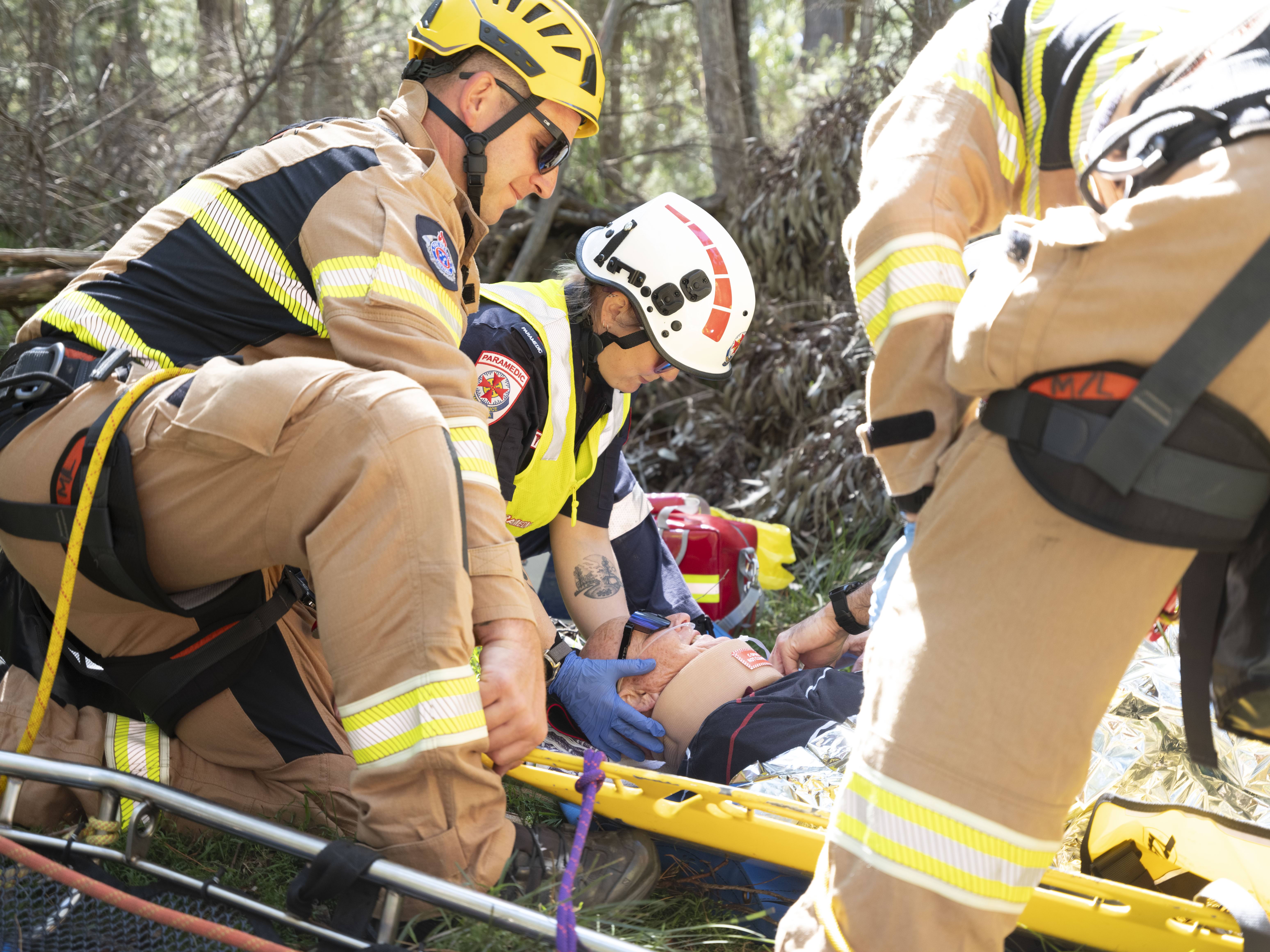
Ambulance Victoria Grampians Regional Emergency Management Coordinator Paul Burton said the infield scenario followed months of planning.
“This training event gave Ambulance Victoria paramedics and our emergency services colleagues the chance to practise critical skills in a setting that is as close to the real thing as possible,” Paul said.
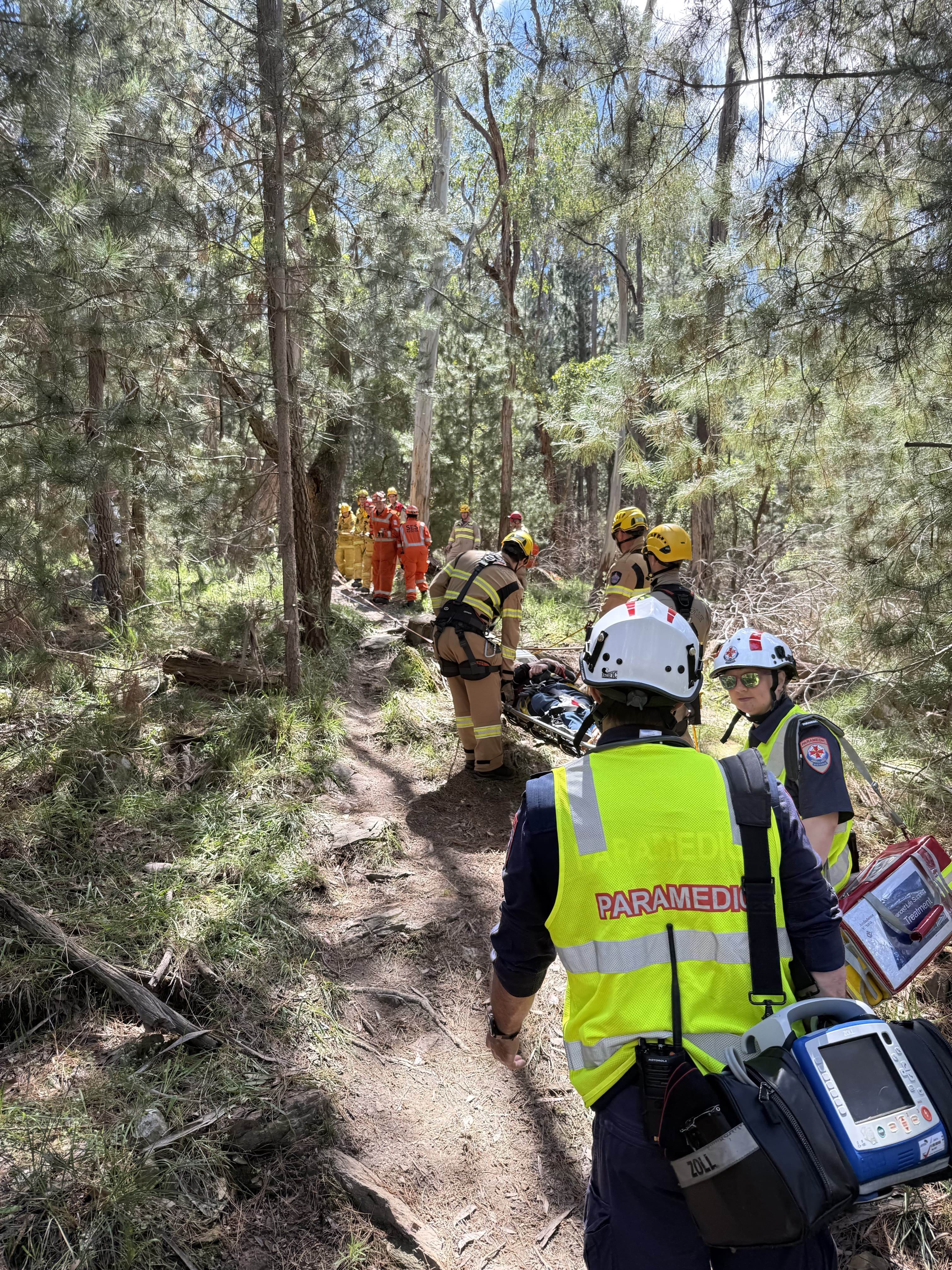
“The 60-kilometre Djuwang Baring network of trails is a very popular regional visitor and tourist destination that also contains challenging terrain including limited vehicle access and steep slopes that, in some areas, require a high angle rope rescue.
“While the complexities associated with extracting an injured mountain biker deep in these trails aren’t new to our crews, the exercise firmed up our approach to working collaboratively with the other agencies to achieve the best result for the patient.”
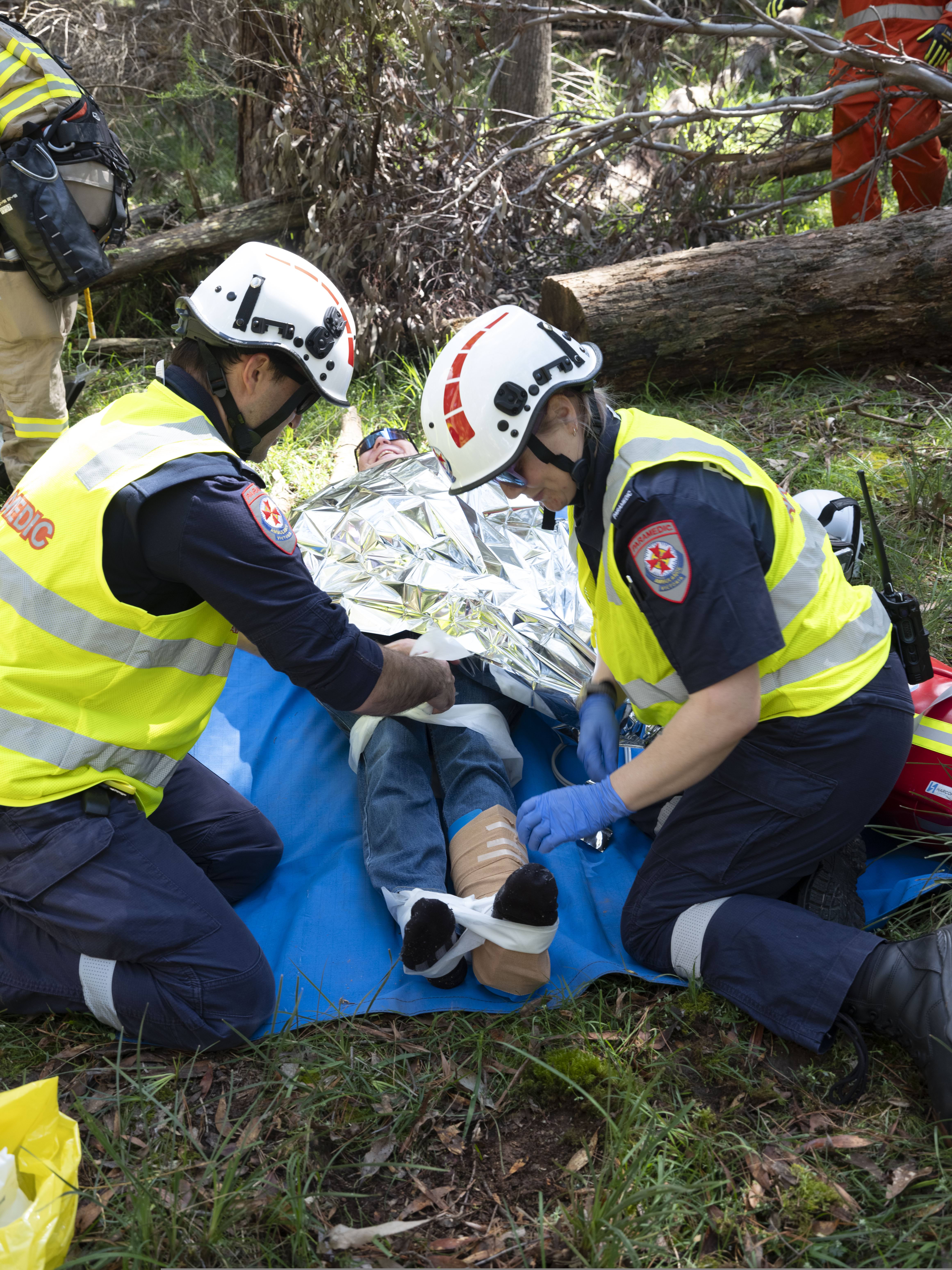
The multiagency rescue scenario allowed crews to test emergency management and communication procedures for areas with minimal phone reception. Also familiarisation with updated emergency marker locations and practising the process of assessing, treating and stabilising a trauma patient in a remote location.
“These exercises allow paramedics to practise working as a team with other emergency services and, at the same time, receive feedback on what they’re doing from third party assessors,” Paul said.
“Overall, the training scenario was a tremendous success and a great learning experience for all involved that will help us provide best care to patients at real incidents, when it matters most.”
As warmer weather arrives and we start spending more time outdoors, it’s a timely reminder to be prepared before heading off on your next outdoor adventure.
Top tips from Ambulance Victoria before you ride:
- Know your trails – Before you set off, take time to check trail maps and difficulty ratings. Stick to trails that match your skill level.
- Download the EmergencyPlus app – This free app has a built-in GPS function to pinpoint your exact location in an emergency, even if you don’t know where you are. The What3Words location function works offline so it can be used in remote areas with poor data connections as well.
- Keep an eye out for emergency markers – dotted along trails, these markers will help identify your location in an emergency.
- Ride with a mate – Solo rides can turn risky quickly. Ride with a friend and look out for each other.
- Tell someone your plans – Let a friend or family member know where you’re going and when you expect to return.
- Carry the basics – Pack a mobile phone and portable charger, small first-aid kit, enough water, and wear appropriate safety gear — a helmet is a must, and gloves, knee and elbow pads are a smart idea.
Find out more about enjoying the outdoors safely and preparing for your adventure.
Updated