

- Published:
- Tuesday 10 March 2026 at 11:30 am
Victoria remains the safest state in Australia to go into cardiac arrest with Ambulance Victoria (AV) initiatives equipping record numbers of community members with the skills to step in and take action to help save a life.
Victoria’s internationally comparable witnessed cardiac arrest survival rate (Utstein) has risen to 44.4 per cent, a nation-leading figure and second only to Denmark (50.2 per cent) worldwide.
The data has been revealed in AV’s Victorian Ambulance Cardiac Arrest Registry (VACAR) 2024-25 Annual Report, which shows paramedics responded to 7,550 out-of-hospital cardiac arrest patients over the year with 477 patients surviving to hospital discharge.
AV Director Research and Evaluation Dr Ziad Nehme said the increased survival rate reflects the impact of AV’s targeted cardiac arrest awareness and skill-building across Victorian communities.
“More than ever, the community is stepping in to help in cardiac arrest emergencies and this is no coincidence – it’s the result of years of AV’s targeted community education and community response initiatives,” he said.
“Over the past year, AV taught more than 29,000 people the life-saving skills of Call, Push, Shock, bringing us significantly closer to our ambition of training over 100,000 Victorians by 2028.
“Our Heart Safe Communities initiative, in partnership with the Heart Foundation, continues to expand, delivering life-saving skills and resources to communities across the state, such as dozens of new publicly accessible automated external defibrillators (AEDs).
“On top of these, the GoodSAM program continues to boost access to early cardiopulmonary resuscitation (CPR) and defibrillation across Victoria, as does the introduction of the Fire Medical Response (FMR) program, which aims to equip 50 CFA firefighter brigades to respond alongside AV paramedics and first responders to cardiac arrests in regional communities – with 39 brigades already on board.”
In 2024-25, 152 cardiac arrest patients in Victoria received a shock from a public AED before paramedics arrived, the highest number on record.
When first shocked by a public AED, an incredible 63 per cent of cardiac arrest patients survived – almost two thirds – a huge increase from 47 per cent in 2023-24. Comparatively, only seven per cent survived when there was no bystander CPR or AED use.
There are now more than 10,819 active and registered AEDs in Victoria, with more than 8,243 of those publicly accessible.
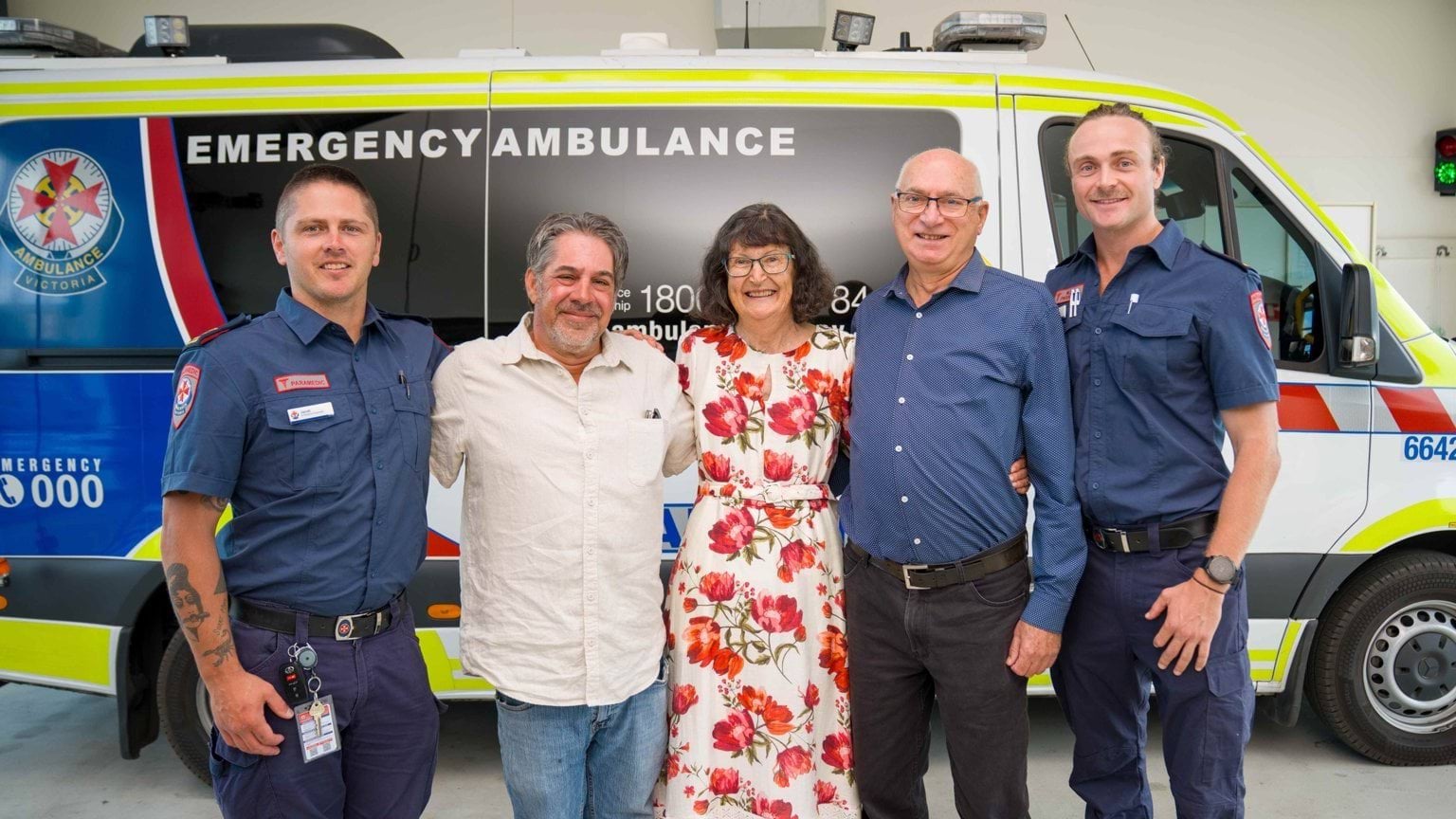
A Mentone family can attest to the impact of bystander CPR and AED use, after it helped save the life of grandmother, Hilary Johnston (71).
Hilary was waiting to board the Queenscliff Ferry when she collapsed in cardiac arrest in August.
Her husband Jim and staff at the ferry terminal launched into action, calling Triple Zero (000) immediately, beginning effective CPR and delivering three shocks with the onsite AED before AV paramedics arrived.
AV MICA paramedic Matthew Van Der Ploeg said the quick action of bystanders gave Hilary the best possible chance of survival.
“When we arrived, there was already an excellent chain of survival in motion,” he said.
“Thanks to the early CPR and defibrillation, we were able to continue that chain of survival by stabilising her airway, breathing and blood pressure. We placed her in a medically induced coma to protect her brain and transported her to hospital for ongoing specialist treatment.
“Hilary was incredibly lucky and it is extremely rewarding to see her doing so well now.”
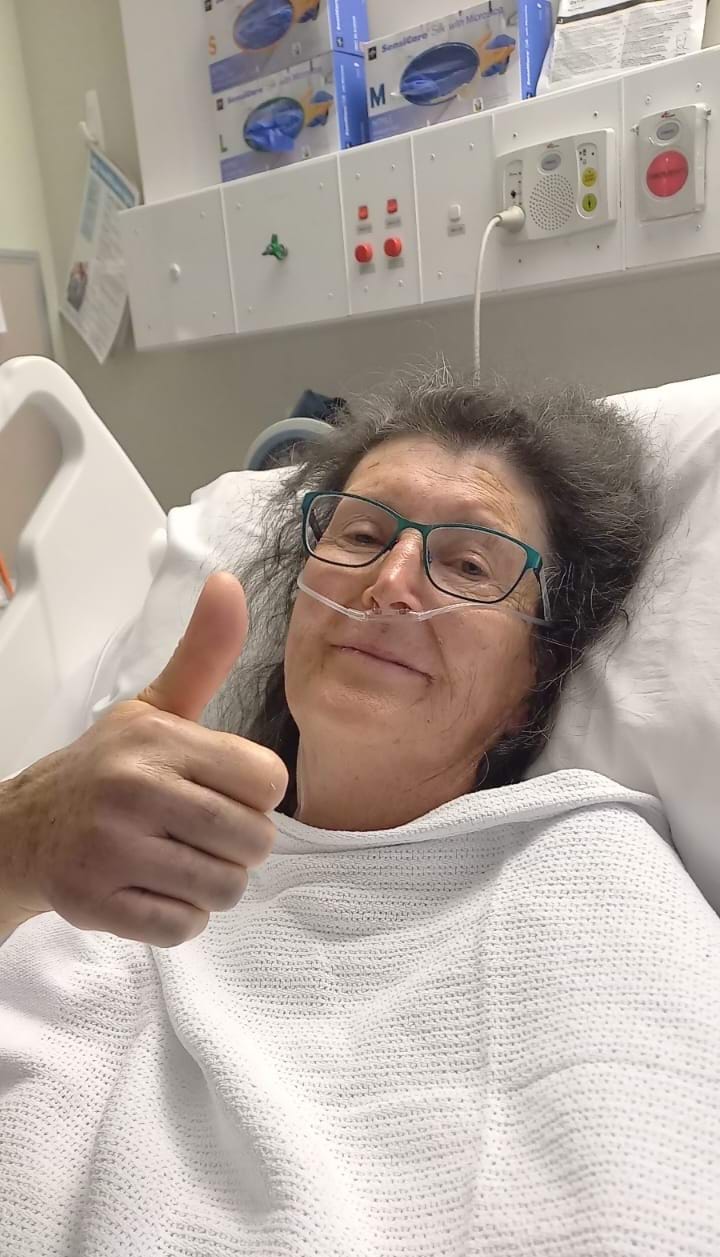
Hilary also benefitted from the attendance of one of Victoria’s more than 18,600 volunteer GoodSAM responders, who attended a total of 932 cardiac arrest patients across 2024-25.
AV Executive Director Quality and Clinical Innovation Dr Tegwyn McManamny said AV continues to work towards the goals of its Cardiac Arrest Improvement Strategy 2023–2028.
“AV paramedics and first responders continue to make exceptional improvements in resuscitation care and quality, driven by the research and insights provided through the annual VACAR reports,” she said.
“Over the past year, we accelerated targeted improvements in system oversight, resuscitation practice and quality assurance, and improved access to cardiac arrest case data, supporting focused debriefing and continuous improvement for our highly-skilled crews on the road across Victoria.
“The improved patient outcomes we’re seeing are the result of deliberate, evidence-driven action and reaffirm AV as a global leader in out-of-hospital cardiac arrest survival.”
Since 1999, the VACAR has tracked, evaluated and strengthened every link in the cardiac arrest chain of survival and is among the most comprehensive cardiac arrest registries worldwide.
Read the full VACAR 2024-25 Annual Report.
Updated